-
About
-
Products
- By Timber Product
- Cladding
- Decking
- Joinery
- Screening
- Panelling
- View all
- By Application
- Exterior Cladding / Siding
- Exterior Rain Screen
- Exterior Roofing
- Interior Walls & Ceilings
- Soffits
- Screening, Fins & Battens
- Windows, Doors & Joinery
- Posts & Beams
- Accessories + Samples
- Coatings
- Fixings
- Samples
-
Shop
- Samples
- Timber Samples
- Architectural Sample Box
- View all
- Accessories
- Coatings
- Fixings
- View all
-
Resources
- By Resource Type
- Technical Data Sheets
- Guides & Manuals
- Technical Articles
- Profile Drawings
- View all
- How To
- How To Specify
- How To Install
- How To Maintain
- Projects
- Contact





Hamilton Central Library - Hamilton, New Zealand
See how Edwards White Architects used Vaaro® Fire at Hamilton Central Library to unite fire performance, cultural storytelling and timber beauty.
Project details
- Architect
- Edwards White Architects
- Builder
- Watts & Hughes Construction
- Product
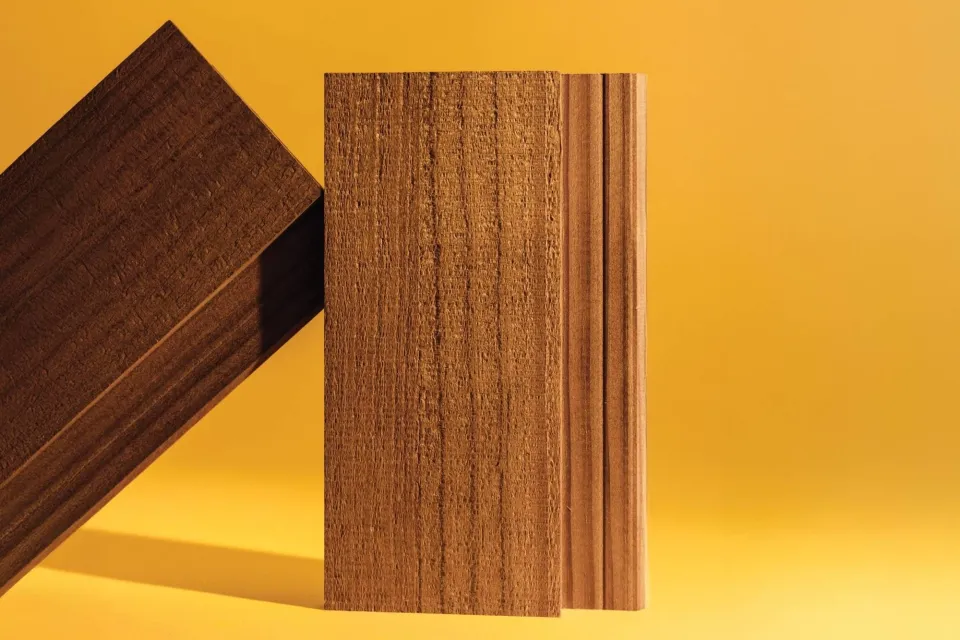
- Vaaro® Fire (WB18 135x18), Brushed Finish in Protector – Teak
- Photography
- Simon Wilson
- Completion Date
- May 2026
- Location
- Hamilton, New Zealand
When Hamilton City Council embarked on the renovation of Hamilton Central Library, the project presented more than a façade replacement. It was an opportunity to reimagine a much-loved civic building and create a landmark that would reflect the city's cultural identity while meeting modern performance expectations.
Working alongside Edwards White Architects, the design team sought a material solution that could deliver a warm, natural aesthetic while satisfying demanding fire compliance requirements. The result was one of New Zealand's first completed civic projects featuring Abodo® Vaaro Fire, creating a façade that combines world-leading fire performance with the enduring beauty of timber.
The project team had two key requirements when specifying timber for the renewed façade.
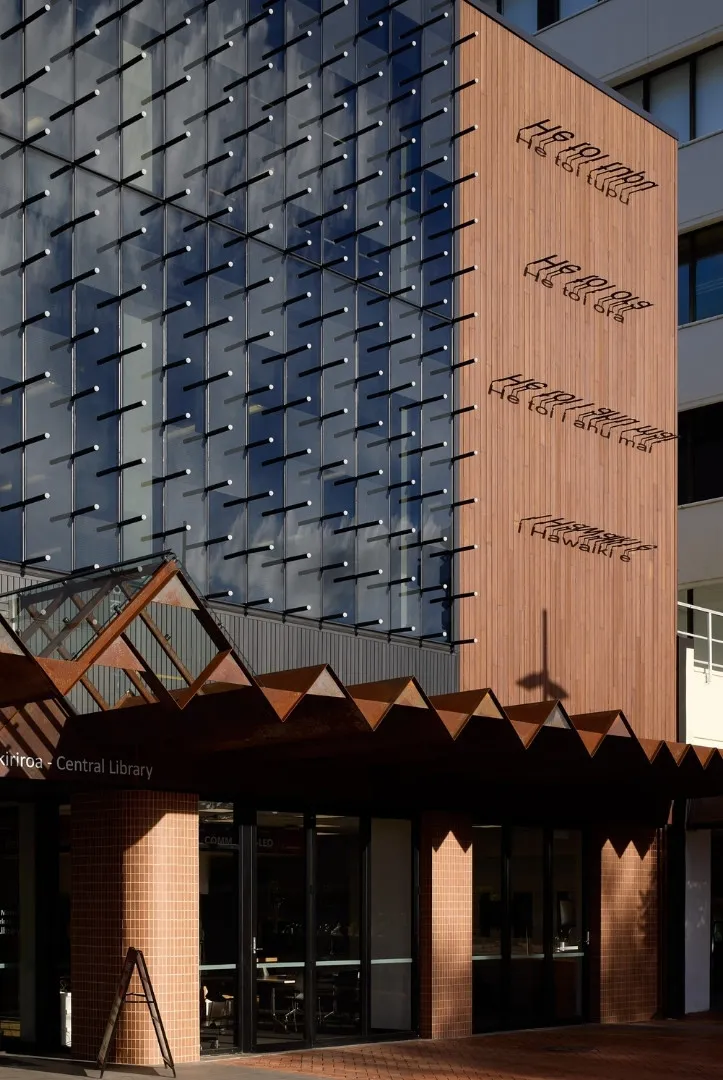
First, the material needed to comply with New Zealand Building Code requirements for a Type A exterior fire rating. Second, the architects wanted a stained timber finish that would maintain its appearance over time, with practical recoating intervals to support long-term asset management.
Having previously specified Abodo timber products on projects including Hamilton Gardens, Edwards White Architects were already familiar with the performance and design qualities of Abodo's Vulcan timber. Vaaro Fire offered the confidence they were seeking, with proven Type A certification and a complete coated, tested product.
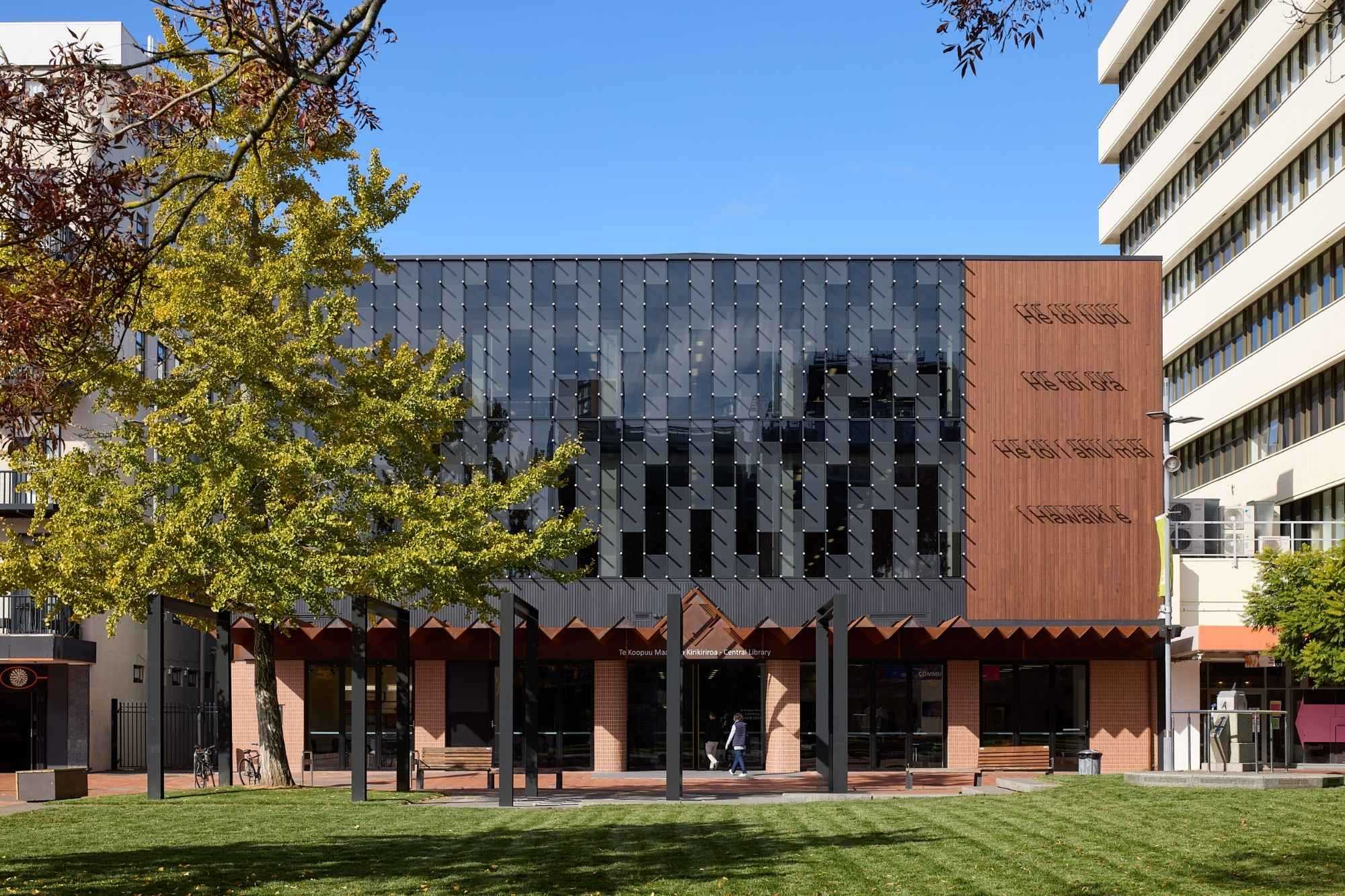
The specified solution included Vaaro Fire timber cladding in a brushed finish, coated in Protector - Teak, providing both fire compliance and a warm, natural appearance suited to the building's civic character.
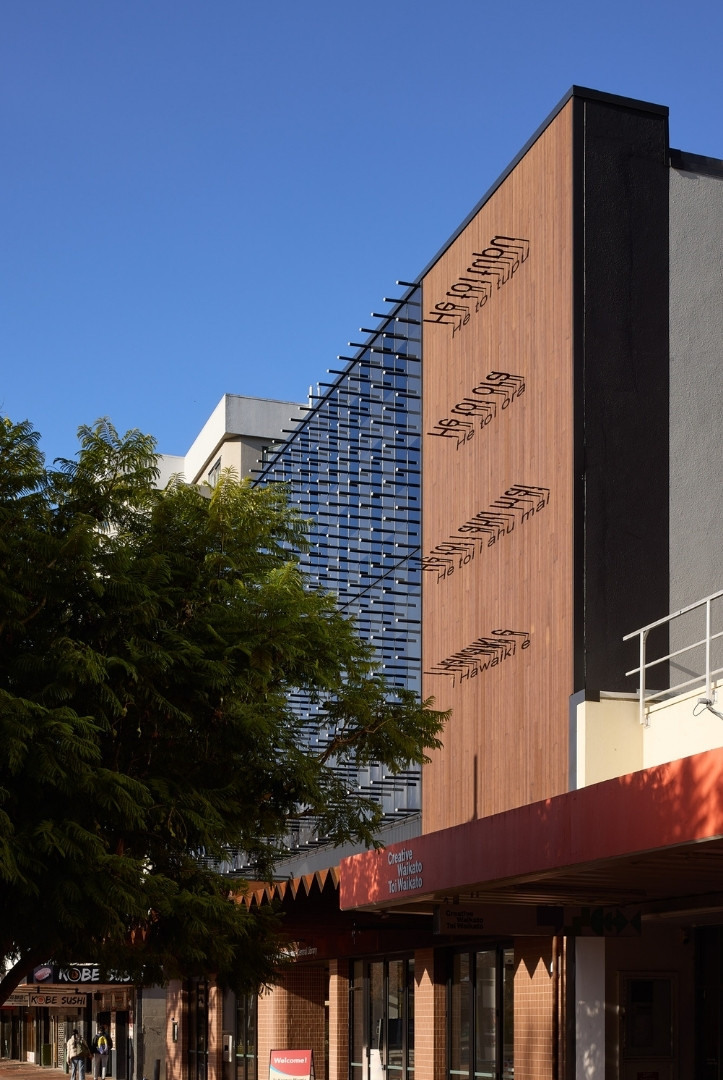
The library façade demonstrates how timber can successfully be incorporated into high-performance building envelopes.
Vaaro Fire timber was installed on non-combustible Dimond galvanised battens over Pro Clima Extasana sealed building wrap and a fully sealed GIB Weatherline substrate. Together, these components create a robust façade assembly that supports the project's fire performance objectives while maintaining the natural appeal of timber.
As a complete coated and tested product range, Vaaro Fire provides designers with confidence that compliance and aesthetics do not need to be mutually exclusive.
More than a technical solution, the façade was also developed as a storytelling element.
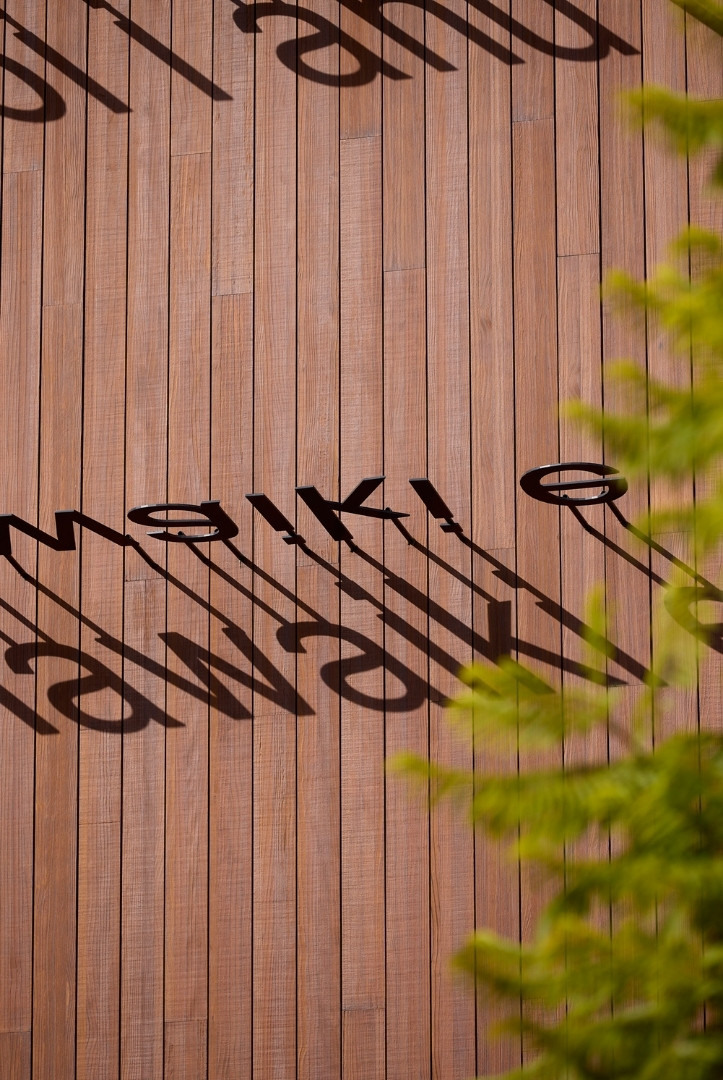
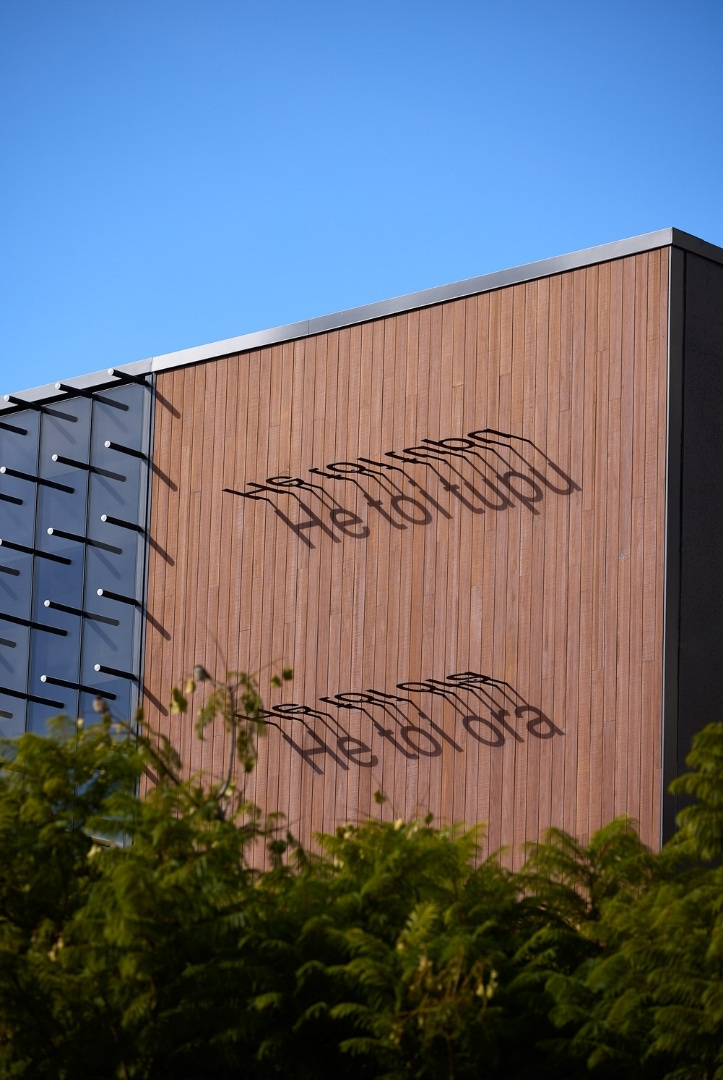
Mounted along the timber-clad frontage are steel letters representing the Māori proverb: "He toi tapu, He toi ora, He toi ahu mai, i Hawaiki e "
Loosely translated as "to grow knowledge, for knowledge to thrive, the knowledge from Hawaiki", the proverb speaks to both traditional and contemporary learning, making it a fitting expression for one of Hamilton's most important public knowledge spaces.
As sunlight moves across the façade during the day, the angled steel lettering casts shifting shadows onto the Vaaro Fire backdrop, bringing the words to life through light and movement. Combined with the building's 495 coloured LED light fixtures and expansive glazing, the timber introduces warmth and texture to an otherwise highly modern façade composition.
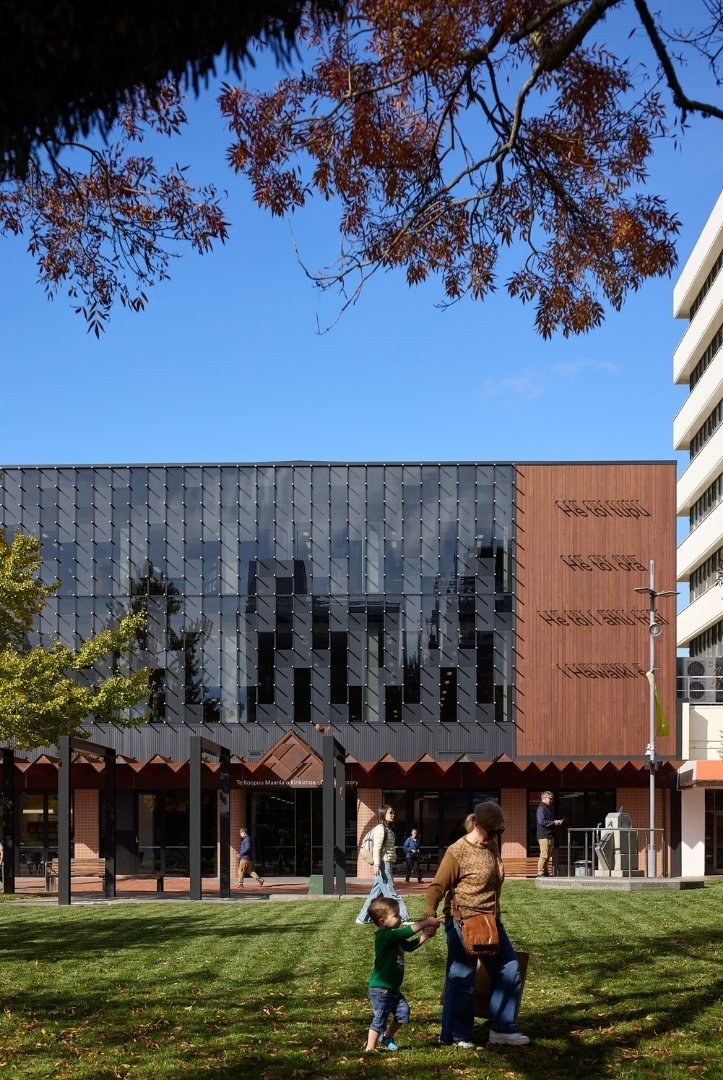
Hamilton Central Library showcases the practical application of Abodo's newest innovation in fire-compliant* timber technology.
Vaaro Fire has been extensively tested against major international fire standards in both coated and uncoated forms, before and after accelerated weathering. These testing procedures emulate long-term exterior exposure, demonstrating exceptional resistance to leaching while maintaining industry-leading fire performance.
With the natural beauty of timber sourced from responsibly managed forests, enhanced durability and proven fire compliance, Vaaro Fire enables architects to specify timber in applications that have traditionally presented significant fire performance challenges.

* Abodo’s Vaaro has been tested to and has achieved AS/NZS 3837:1998 Type A and ISO 9705:2003 Group 1-S (NZ), AS 3959:2018 BAL29 and AS 5637.1:2015 Group 1 (AU), B-s2, d0 (LVG) / B-s1, d0 (Flatsawn) (EN 13501-1:2018) DRF EXT INT1 INT2 (EN 16755:2017) (UK+EU), and ASTM E84 Class A (USA) fire compliance standards.